Programming
Writing a bilingual emcee script that lands
How the best emcees translate jokes, not just sentences.
Spring 2026 · 6 min read
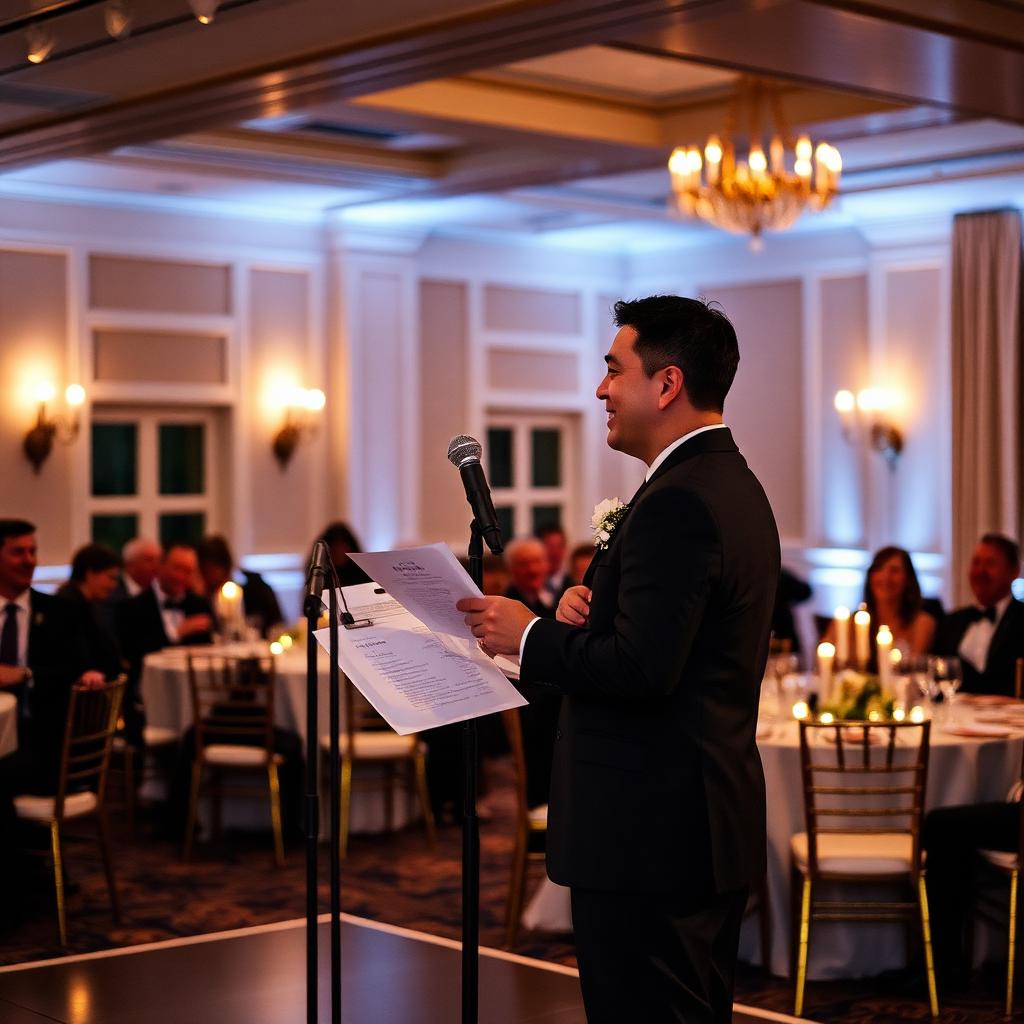
A bilingual reception is not a reception held twice. It is a reception held once, in two languages, with one rhythm. The emcee's job is to keep the room together — and the hardest part of that job is the jokes.
The rule we've heard from the best emcees: translate intent, not text. A pun in Mandarin almost never lands in English, and vice versa. Write two short, parallel jokes that arrive at the same emotional beat instead of forcing a literal translation.
Keep each segment short. Sixty to ninety seconds per language, then move on. Guests who only speak one of the two will stay engaged if they know the other language is also brief. Lose them once and you lose them for the night.
Use names, not titles. "Uncle David" is warmer and more legible across both sides of the room than "the groom's father's eldest brother." Write the names phonetically for the emcee if their pronunciation isn't obvious — and have them rehearse with the family the night before.
Build in one moment of silence. A toast that lands hardest is followed by a beat of nothing — no music cue, no transition. Most emcees skip past it because silence on a microphone feels long. Trust it. The room will fill it.