Traditions
The tea ceremony procession, order by order
Who is served first, who pours, and how to keep the sequence from stalling.
Spring 2026 · 7 min read

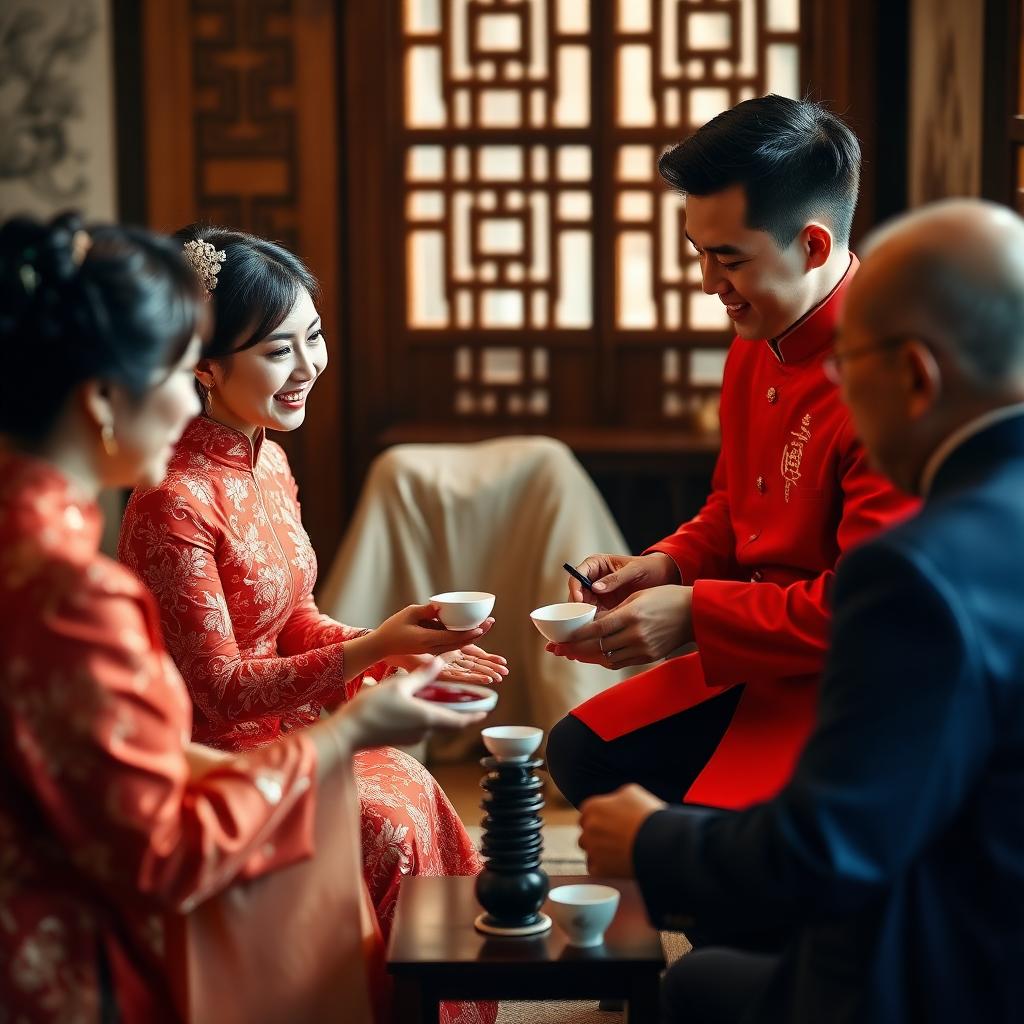
The tea ceremony reads as a single ritual, but it is really a procession with a strict order. Getting the order right is what elders notice; getting the timing right is what keeps your morning intact.
Seniority governs everything. Serve the groom's side first if the ceremony is at his family home, then the bride's, or run two ceremonies if both families host. Within each family: paternal grandparents, maternal grandparents, parents, then aunts and uncles by age, then elder siblings and elder cousins.
Couples kneel or bow depending on family custom. Ask both mothers directly rather than assuming; the answer is often different on each side and neither will volunteer it.
The couple presents tea with two hands, addressing each elder by their correct kinship term. Write the terms on a card for the tea attendant to whisper. Nobody will fault you for the card; they will notice the wrong term.
Elders drink, then present a red envelope or a piece of gold jewelry. A designated relative should collect and secure these immediately, and a second person should be pinning jewelry so the bride is not fumbling with clasps.
Budget four minutes per couple served, plus ten minutes of overflow. Twenty sets of elders is ninety minutes, not thirty, and the photographer needs a fixed position agreed in advance so nobody is stepping into the frame.
Practical staging: a low table, two cushions, a warm pot refreshed between rounds, and lotus seed or red date tea for sweetness and the wish for children. Have a second pot brewing offstage.